Understanding Return to Player
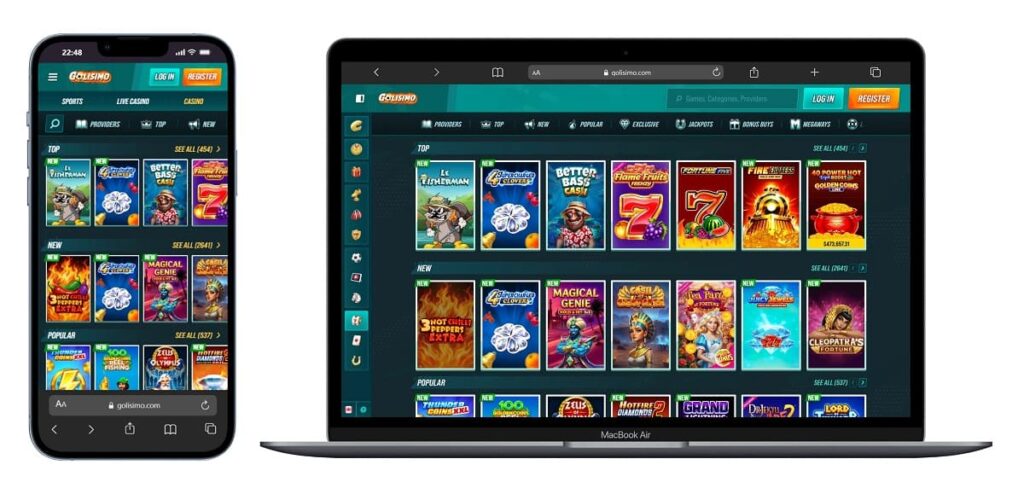

Each spin of a slot reel, each blackjack hand, every roulette wheel rotation runs on a mathematical engine that shapes what players can expect over time. That engine is Return to Player, universally shortened to RTP. Casual gamblers might chase jackpots, flashy bonus rounds, or polished visuals. Experienced players know that RTP is the single most revealing number a game can offer. It isn’t a guarantee of short-term results. It doesn’t promise that a single session will end in profit. Instead, RTP is a theoretical percentage: the share of all wagers a game is programmed to pay back to players over a huge number of rounds. Comprehending this notion turns gambling from a blind leap into a calculated form of entertainment. At Golisimo Casino, transparency about these numbers is a cornerstone of trust, so players can inspect the mechanics behind their favorite titles before they place a single bet. This article breaks down everything you need to know about RTP—how it’s calculated, common myths, and how to use it to pick games and manage a bankroll responsibly.
Why RTP Matters for Extended Play
RTP’s true importance appears not in a one evening of play, but over weeks, months, and years of frequent gambling. A difference of just one or two percentage points can substantially change your projected loss over time. Consider two slot games: one with a 94% RTP, another with a 97% RTP. If you wager a total of 10,000 units over a year, the theoretical loss on the first game would be 600 units, while on the second it would be only 300 units. That’s a 50% decrease in expected loss just by selecting a game with a somewhat higher RTP. For players who consider casino gaming as a regular hobby, this calculation is the nearest thing to a sustainable strategy. RTP doesn’t remove the house advantage, but it reduces how fast it depletes your bankroll, lengthening playtime and enhancing your chances of achieving a meaningful win before your balance is exhausted. High-RTP games practically give you more spins, more hands, or more rounds for the same money, which enhances the entertainment. That’s why veteran gamblers often to gravitate toward slots with listed RTPs above 96% and table games with low house edges. At Golisimo Casino, filtering games by RTP lets long-term players line up their entertainment budget with the best mathematical conditions available, converting a informal pastime into a more strategic pursuit.
Finding RTP Information at Online Casinos
Obtaining correct RTP data is far easier that trustworthy online casinos leverage transparency like a competitive edge. Most licensed platforms show a slot’s RTP inside the game’s info or help section—often behind an ‘i’ icon or a paytable button. For table games, the RTP or house edge can be found within the game rules. Independent review sites and game developer websites additionally publish validated RTP figures, so you can cross-check the numbers. At Golisimo Casino, a commitment to player education imerisia.gr ensures RTP information is featured prominently across a huge game library, simplifying to compare titles prior to risking real money. One thing to watch: some games come in multiple RTP variants since operators may select between different payout settings offered by the developer. A slot that advertises a 96% RTP on a review site may be adjusted at 94% on a specific casino platform. That’s why it’s crucial to verify the RTP directly in the game at the casino where you plan to play. Live casino games like blackjack or roulette feature fixed rules that set their RTP, and those are usually outlined inside the game lobby. Dedicating a short while to check these numbers lets you avoid low-RTP traps and focus on titles that offer the best mathematical value for your style of play.
Payout percentage Variances Across Various Game Categories
Slots
Slot machines cover the largest RTP spectrum in every casino, starting at under 90% right up as high as exceeding 98%. Most current video slots land between 95% and 97%. Jackpot jackpot slots, nevertheless, set aside a part of every bet into the jackpot pool, which might push the basic game RTP lower to around 88% and 92%. This reduced base RTP constitutes the trade-off for a chance at a transformative amount. Old-school three-reel slots frequently run on simpler math as well as can offer RTPs similar to video slots, though they usually to be lower in volatile. Volatile slots might boast a superior RTP however pay out infrequently; low-volatility games offer smaller wins regularly. A slot’s RTP is based on its paytable, the frequency of symbol combinations, along with the manner in which bonus features function. When you focus on RTP, look for slots that clearly display figures of 96% or more along with steer clear of games for which the percentage is missing—that frequently indicates a worse arrangement. Golisimo Casino’s slot collection includes many high-RTP titles, plainly marked so you are able to find the highest-paying selections fast.

Table-based games
Table games frequently deliver the highest RTPs in the casino, occasionally topping 99% when you compete with optimal strategy. Blackjack can reach an RTP of 99.5% or higher, depending on the rule set—like whether the dealer stands on soft 17 or whether doubling after splits is allowed. Baccarat is one more standout: the banker bet carries a house edge of just 1.06% (RTP 98.94%), and the player bet sits at 1.24%. European roulette with a single zero gives a steady 97.3% RTP, while American roulette with its double zero drops to 94.74%—a significantly worse choice. Craps, if you stick to pass line and come bets with full odds, can also boost RTP above 99%. The downside with table games is that RTP is never a set number if you ignore basic strategy. In blackjack, poor decisions can easily drive the house edge past 5%, reducing the effective RTP. So the theoretical return only materializes when you employ the right strategy. That interactive element renders table games uniquely rewarding for anyone eager to learn the rules inside out.
Real-time Casino Games
Live casino games combine digital convenience with the atmosphere of a brick-and-mortar floor, and their RTPs match those of physical tables golisimo-casino.net.gr. Live blackjack tables usually offer RTPs from 99.28% to 99.5%, depending on the table’s specific rules. Live roulette almost always uses a single zero wheel, giving a consistent 97.3% RTP, though some variants add special bets or multipliers that tweak the payouts. Live baccarat keeps its exceptionally high RTP, with the banker bet remaining one of the most reliable wagers in the whole casino. Game show-style live titles like Dream Catcher or Crazy Time bring a different dynamic: RTP can vary a lot between bet types. The main money wheel bet might be around 96%, while bonus rounds and side bets can dip much lower. If you play live casino games at Golisimo Casino, check the rules and paytables for each specific table or game show—the flashy presentation can sometimes hide the math. The live format doesn’t change the underlying probabilities; it just transmits them through a human dealer and a real-time video stream, so RTP matters just as much as in any other format.
What Does Return to Player (RTP) and How Is It Determined?
RTP is a figure that shows how much of the total money wagered on a game will mathematically be paid back to players over a long stretch. A slot with a 96% RTP indicates that for every 100 units wagered, the game is programmed to return 96 units on average, and the casino retains 4 units as profit over the long run. This computation doesn’t happen after each spin or session; it only becomes evident after millions—sometimes billions—of simulated or real rounds. Game developers use sophisticated algorithms and random number generators to keep short-term outcomes random while making sure the overall payouts match the declared RTP over a large sample. Independent test labs audit these games to confirm the actual performance aligns with the theoretical model. So RTP is a statistical expectation, not a set return per player. The percentage applies to all wagers collectively, indicating one player might win far more than 96% of their bets while another loses much more. The math ensures the house keeps its edge, but the distribution of wins is unpredictable and uneven. That’s why RTP works best as a long-term indicator of a game’s payout potential, not a session-by-session scorecard.
Widespread Myths About RTP Debunked
Misconception: A Slot Machine Is Due for a Win
One of the biggest stubborn gambling myths is the belief that a game that hasn’t given wins in a while is somehow ‘due’ for a big win. This mistake comes from misunderstanding how random number generators work. Every spin on a slot machine is a separate event, completely independent of what happened before. RTP represents a long-term average, not a cycle that begins anew after a certain number of losses. A game with a 96% RTP does not indicate that after 100 losing spins, a win is guaranteed. It means that over millions of spins, total payouts will reach near 96% of all money wagered. The random number generator lacks memory; it has no idea whether the last spin was a win or a loss. So a machine can go thousands of spins without a big payout, or it can produce two jackpots back-to-back. Chasing losses under the impression a game is ‘cold’ or ‘hot’ is a psychological trap that ruins bankroll management. The only reliable factor is the statistical expectation built into the game’s design, which remains constant no matter what short-term streaks appear like.
Myth: Higher RTP Ensures Short-Term Profits
Another frequent error is believing that picking a high-RTP game will protect you from losing money in a single session. A 98% RTP game is mathematically better than a 90% one, but short-term variance can be harsh. RTP is a theoretical figure that only appears over a huge number of rounds. In one evening, you may spin a high-RTP slot 1,000 times and still lose a big chunk of your bankroll owing to the game’s natural volatility. Slots are designed with hit frequencies and payout distributions that can cause long dry spells even when the RTP seems favorable. A game could return 98% over a billion spins but still devour your entire deposit in an hour. That’s why RTP should never be misinterpreted for a short-term profit guarantee. It’s a tool for comparing games over the long haul, not a session-by-session insurance policy. Players who understand this difference approach high-RTP games with realistic expectations, knowing that luck and variance rule the short term while math dominates the long term.
Contrast Between RTP and House Edge
RTP and house edge are complementary concepts, but new players often mistake them. The house edge is the mathematical counterpart of RTP—the casino’s statistical edge. A game with a 97% RTP has a house edge of 3%. That means the casino aims to hold 3 units for every 100 wagered over time. The difference is important: RTP focuses on what comes back to the player, while house edge emphasizes the casino’s profit margin. In table games like blackjack or baccarat, people discuss the house edge more often, especially when strategy influences the outcome. For example, perfect basic strategy in blackjack can push the house edge down to 0.5%, which corresponds to an RTP of 99.5%. Slots, on the other hand, nearly always quote RTP directly. Knowing both metrics lets you compare games across categories with a single lens. A single-zero roulette wheel has a house edge of 2.7% (RTP 97.3%), while a slot with a 96% RTP carries a 4% house edge. Realizing that these numbers show the same relationship from opposite angles enables you to make smarter decisions about where to put your bankroll at platforms like Golisimo Casino, where the stats are easy to find.
Applying RTP to Create Smarter Wagering Selections
RTP is not a crystal ball, yet it remains the most effective tool available to you for building a logical method to casino gaming. Begin by setting a sensible entertainment budget and acknowledging that the math always favors https://www.enikos.gr/partner-content/eurojackpot-antistrofi-metrisi-gia-tin-klirosi-ton-63-ekat-evro-mechri-tis-1900-i-katathesi-deltion-apokleistika-sta-katastimata-opap/2159366/ the house over time. With that in mind, RTP turns into a filter for choosing games that lower your anticipated loss rate. When playing slots, you can deliberately choose titles with an RTP of 96.5% or higher, quickly improving your long-term outlook compared to without thought choosing a game with 92% RTP. For table game fans, mastering basic blackjack strategy or following the banker bet in baccarat can cut the house edge down to a sliver. RTP also helps you steer clear of games with undisclosed disadvantages—side bets with awful odds, or slot variants configured with reduced payout percentages. In addition to game choice, grasping RTP encourages a more balanced mindset by replacing superstition with statistical awareness. It moves your focus off pursuing losses or trusting hot streaks to seeing the game as funded entertainment with transparent mechanics. At Golisimo Casino, detailed RTP data makes it easy to make these knowledgeable choices, converting each session into deliberate enjoyment as opposed to blind chance. RTP offers no guarantee of wins, but it does mean your decisions are grounded in reality, not fiction.